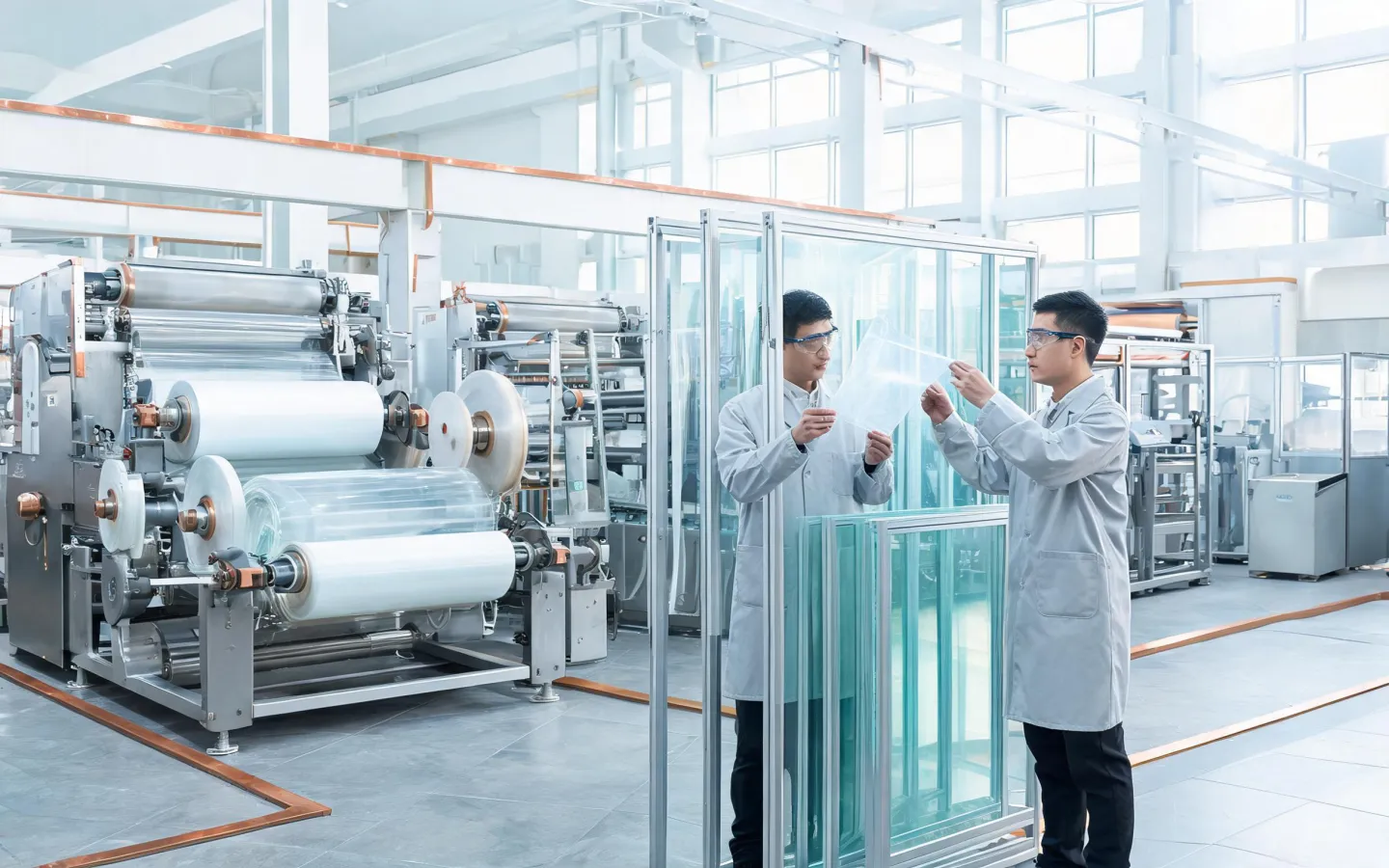
Curtain Wall Glazing
Laminated IGUs for high-rise facades needing residual strength, acoustic damping, and color-stable daylight.
Specialty chemicals for the built environment
From Saflex PVB interlayers to solar-control performance films, Eastman Chemical equips specification writers with documented optical clarity, impact resistance, and UV stability data before curtain wall packages go to bid.
Engineering data packages
Expand each group to compare residual moisture targets, yellowness index, and adhesion values that glazing engineers use when selecting laminated glass chemistries for high-rise facades.
| Visible light transmittance (typical clear) | 88–90% |
|---|---|
| Yellowness index (YI, aged) | < 2.5 after accelerated UV |
| Glass adhesion (peel, N/cm) | 8–12 depending on primer stack |
| Residual moisture target | 0.35–0.55% by weight |
| Service temperature window | −40°C to 80°C laminated assemblies |
| Solar heat gain coefficient (SHGC) | 0.22–0.45 by film grade |
|---|---|
| Visible light reflectance | 8–35% exterior-facing options |
| UV rejection (300–380 nm) | ≥ 99% |
| Emissivity contribution | Supports low-e retrofit stacks |
| Dimensional stability | Validated for thermal cycling on IGUs |
| VOC emissions pathway | Low-VOC formulations for LEED credits |
|---|---|
| Moisture vapor transmission | Tuned for board and core interfaces |
| Fire resistance pairing | Compatible with Class A assemblies |
| Flexural strength contribution | Improves laminated panel stiffness |
| Warranty support window | Project-specific, typically 10–25 years |
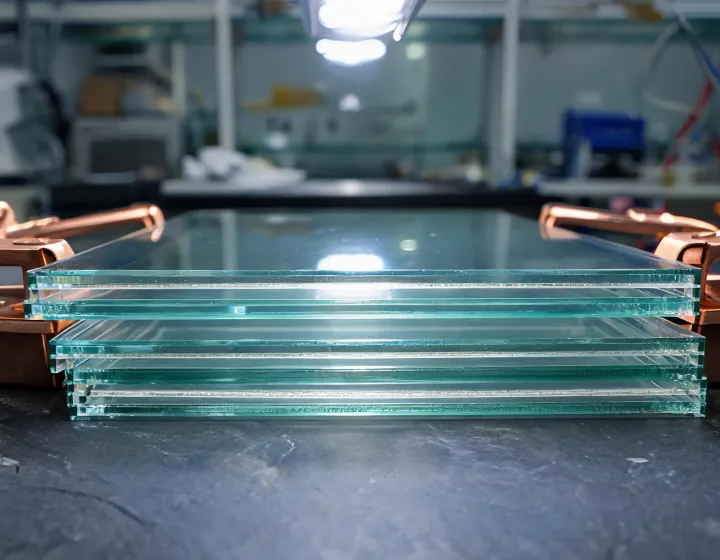
Why chemists sit in the design room
PVB interlayer grades maintain residual strength after impact while preserving daylight quality for atrium and storefront glazing.
Stabilizer packages slow yellowing so laminated glass retains transmittance through decades of southern exposures.
Performance films reduce SHGC on existing commercial fenestration when thermal bridging upgrades are staged.
ISO 9001:2015, ISO 14001:2015, and NSF/ANSI 61 documentation support potable-adjacent and indoor-air scopes.
Forty-six facilities feed multi-region projects so interlayer lots stay within adhesion and moisture tolerances.
Application markets
Scroll to review building sectors that rely on architectural interlayers, solar-control films, and specialty formulations for board and panel systems.
Laminated IGUs for high-rise facades needing residual strength, acoustic damping, and color-stable daylight.
Storefront and punched openings where solar-control films cut peak cooling loads without full glass replacement.
Interlayer stacks specified for hurricane, blast, and intrusion performance on institutional campuses.
Specialty adhesives and polymer systems that stabilize panel cores against moisture vapor transmission.
Decorative laminated glass partitions with UV-stable interlayers for branded atria and elevator lobbies.
Large-format laminated canopies balancing impact resistance with high visible light transmittance.
Swipe or scroll horizontally to explore markets
“Eastman Chemical’s interlayer TDS package let our curtain wall team lock residual moisture and yellowness limits into the glazing schedule before mock-up day—optical clarity held through thermal cycling without last-minute primer changes.”
Request a technical data sheet package or schedule a chemist consultation for interlayer, film, and panel chemistry selections.